Q: What is the main topic of this article?
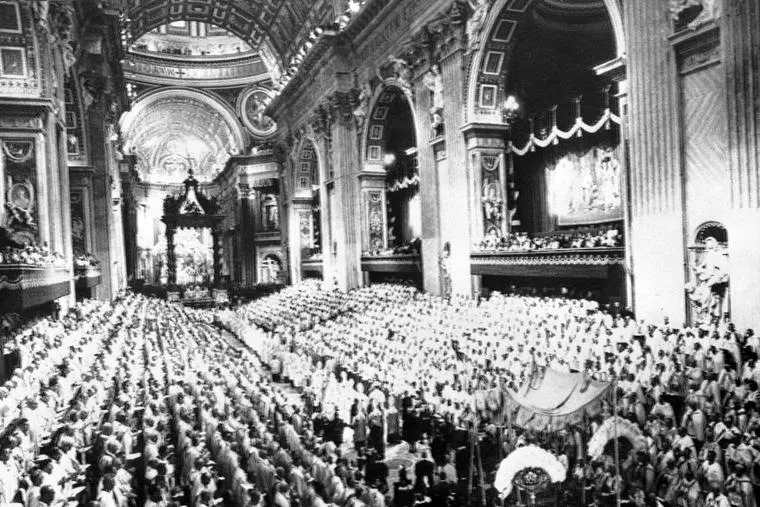
A: This article discusses “Dignitatis Humanae,” a declaration on religious freedom approved by Pope Paul VI during the Second Vatican Council 60 years ago, highlighting its significance and development within the Catholic Church.
Q: Why was “Dignitatis Humanae” an important document for the Catholic Church?
A: It marked a decisive shift in the Church’s stance, proclaiming the vital importance of religious liberty for modern society and significantly advancing ecumenical dialogue with non-Catholic Christians.
Q: What role did American bishops play in the creation of this document?
A: American bishops, particularly Cardinal Francis Spellman of New York, were instrumental in pushing Council authorities to prioritize and move forward with the text, emphasizing its importance.
Q: How did the document define “religious liberty”?
A: It defined religious liberty as the “right of the human person to the free exercise of religion according to the dictates of his conscience,” and freedom from external coercion in one’s relationship with God, without implying a disregard for objective truth or moral obligation.
Q: What was the document’s message regarding Catholics’ interactions with non-Catholics?
A: While encouraging evangelization and witness, it also stressed the importance of avoiding any “direct or indirect coercion” in leading non-Catholics to the faith, grounding this principle in the free nature of the act of faith itself.
‘Dignitatis Humanae’ at 60: Vatican II’s Decisive Stand for Religious Freedom