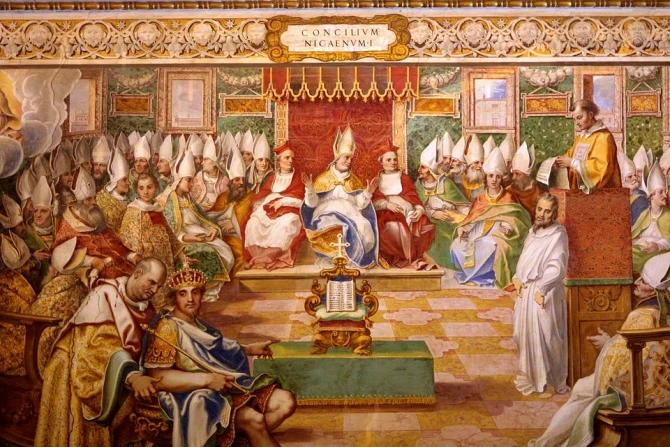
- The Council of Nicaea, held in A.D. 325 in modern-day northern Turkey, was a pivotal gathering of over 300 bishops that aimed to establish a common Christian creed, resolve Christological disputes stemming from the Arian heresy, and foster Church unity, less than 15 years after Emperor Constantine granted Christians freedom of worship.
- A primary outcome of the council was the initial formulation of the Nicene Creed, a foundational profession of faith still recited in Catholic, Orthodox, and some Protestant services today, which affirmed the Son’s eternal divine nature and explicitly rejected Arian claims that Christ was a created being.
- The council directly confronted and condemned Arianism, a heresy advocated by the priest Arius, who asserted that Jesus Christ was a created being and therefore not co-eternal or equal in divinity with God the Father, a position which Dominican Father Dominic Legge noted “threatened the central truth of Christianity that God became man for our salvation.”
- At Nicaea, the bishops nearly unanimously affirmed that Christ is “true God from true God, begotten not made, of one substance with the Father,” with over 300 bishops voting in favor of this doctrine and only two siding with Arius, thereby establishing a critical theological consensus.
- St. Athanasius, a leading opponent of Arianism, meticulously used scriptural references, such as John 1:1 (“in the beginning was the Word, and the Word was with God, and the Word was God”) and Christ’s declaration “before Abraham was, I am,” to powerfully argue for the Son’s eternity and underscore the divine nature of Christ.
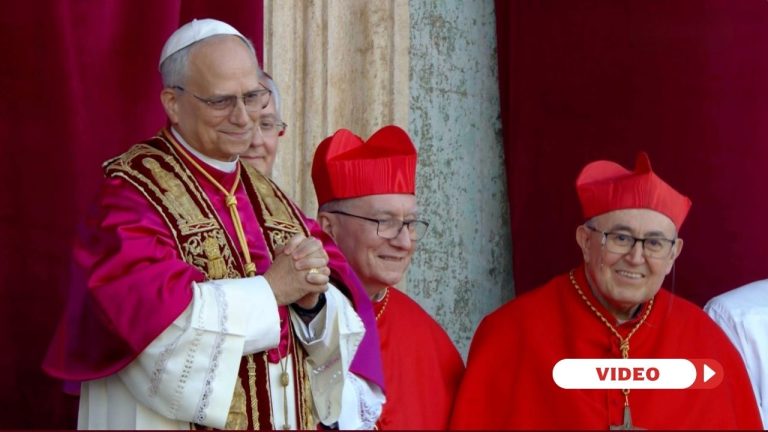
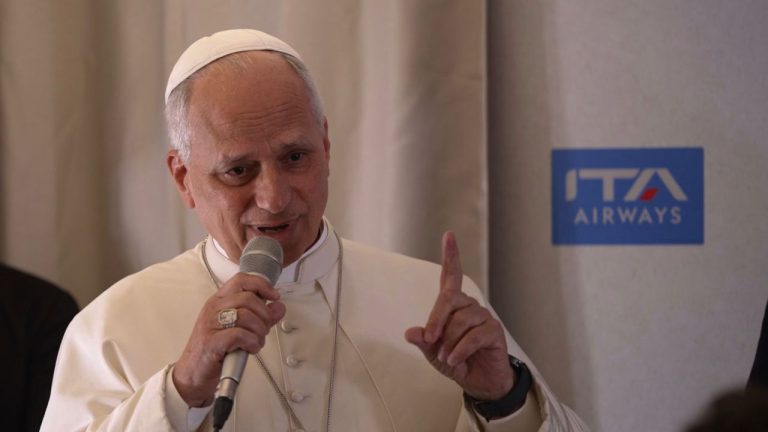
- The Council of Nicaea remains a significant symbol of Christian unity, with its authoritative decisions still accepted by the Catholic Church, Eastern Orthodox Church, and many Protestant denominations 1,700 years later, as acknowledged by Pope Leo XIV, who highlighted its role in the “development of the creed shared by all the Churches and ecclesial communities.”
Council of Nicaea: 1,700 years of Christian unity amid division