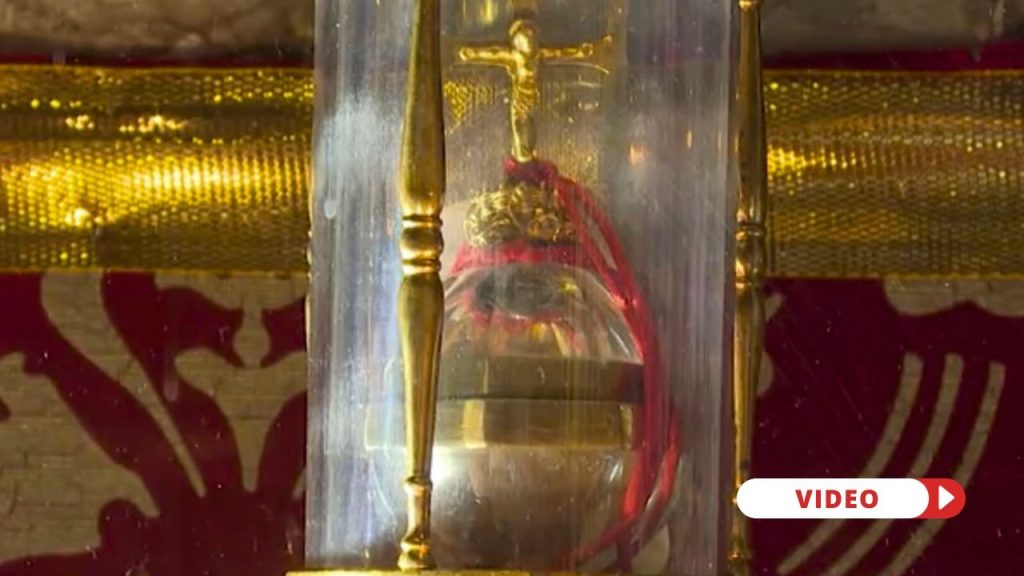
- For the first time in over 1,200 years, the relic of the Most Precious Blood of Christ, traditionally kept in the Basilica of Sant’Andrea in Mantua, traveled to Rome to the Shrine of San Salvatore in Lauro, a “tremendously exceptional event” facilitated by Monsignor Pietro Bongiovanni, the rector of the shrine, in conjunction with a Jubilee celebration.
- The relic’s tradition originates from the Roman soldier Longinus, who pierced Jesus’ side on the cross and then collected the blood-soaked soil after his conversion, which was buried with him and later rediscovered around 800 AD during excavations beneath the altar of the Church of San Lorenzo in Mantua.
- Fr. Bongiovanni emphasized the relic’s profound significance as a “sign of mercy,” reminding the faithful of God’s boundless love, forgiveness, and embrace for humanity, linking it directly to the Eucharistic mystery where the sacrifice of Calvary is renewed.
- During its 10-day stay in Rome, the San Salvatore in Lauro sanctuary experienced a remarkable influx of devout faithful who participated with deep emotion, praying, kneeling, and seeking confession, creating an “extraordinary moment of faith” that reinforced the central mysteries of Christian belief.
- The veneration of the Blood of Christ allowed believers to connect with Jesus’ sacrifice for redemption, highlighting mercy and forgiveness as foundational to the Christian faith, and fostering a deeper understanding of the Eucharist’s role in spiritual life.
- The historic visit not only provided an unprecedented opportunity for veneration but also underscored the enduring spiritual ties between Mantua, as the relic’s traditional home, and the Vatican, reinforcing the Catholic Church’s unity and its reverence for sacred relics.
Relic of the Most Precious Blood of Christ Travels to Rome