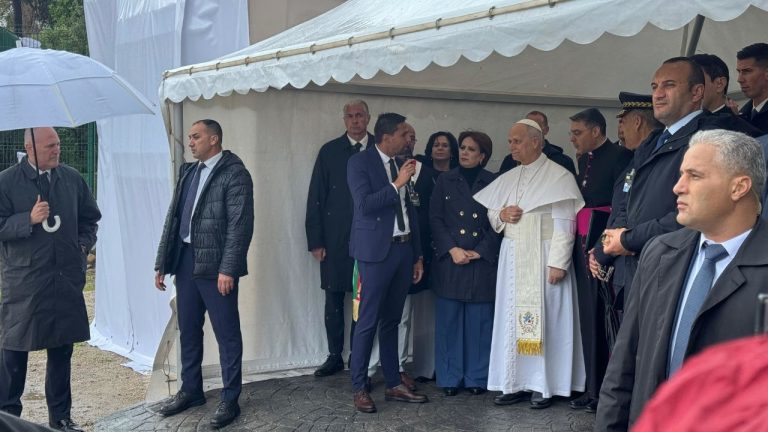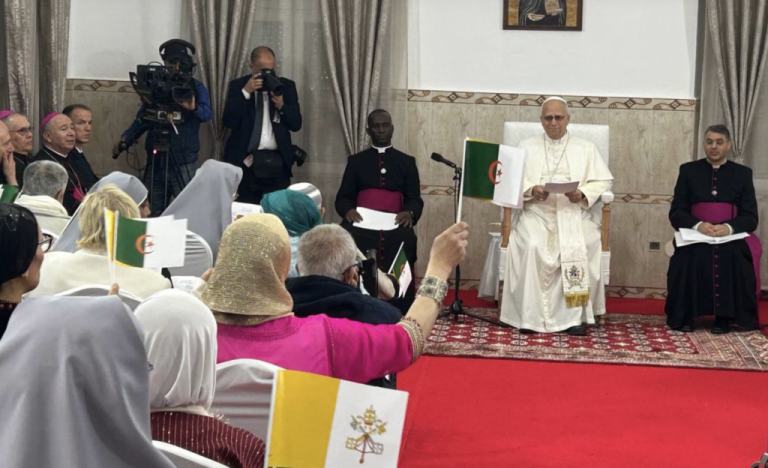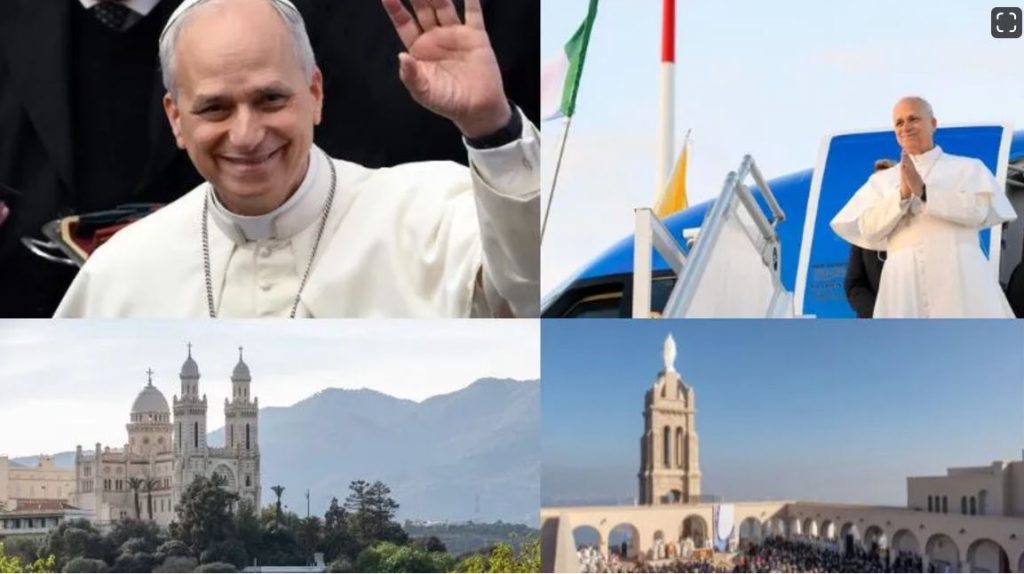
ALGIERS, Algeria — As Pope Leo XIV prepares to embark on his historic first apostolic journey to Africa on April 13, 2026, his first stop will be the North African nation of Algeria. In a land where the Church’s roots are as ancient as the desert sands yet its current presence is as delicate as a mustard seed, the Holy Father arrives as a “messenger of peace” and a witness to the “culture of encounter”.
While Catholics in Algeria constitute a statistically tiny minority—estimated at fewer than 10,000 in a nation of 48 million—the qualitative impact of their presence is profound. Ahead of the Pope’s arrival in Algiers and Annaba, here are seven essential keys to understanding the Church in this historic land.
1. A Church of “Presence” Over Numbers
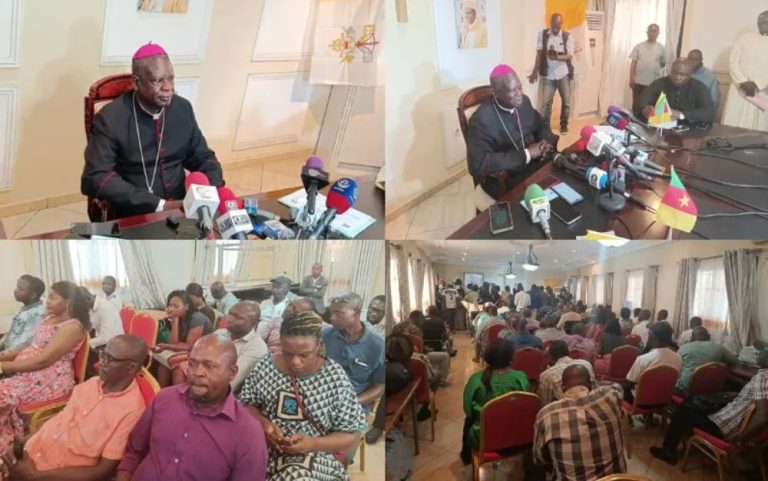
The Catholic Church in Algeria is one of the smallest in Africa, representing a fraction of 1% of the population. Composed largely of expatriates, sub-Saharan African students, and religious personnel, it is a Church that defines its mission not through expansion, but through “presence.” In a context where public proselytism is restricted, the Church’s witness is found in service, education, and silent accompaniment.
2. The Living Legacy of St. Augustine
Algeria was once a thriving center of Latin Christianity, most famously as the home of St. Augustine of Hippo (A.D. 354–430). The Pope’s visit to Annaba—ancient Hippo Regius—is a symbolic bridge between the Church’s patristic heritage and its modern minority status. The Basilica of St. Augustine stands as a beacon of this continuity, reminding the world that North Africa was once the intellectual heart of the Catholic faith.
3. A Modern Cloud of Witnesses: The 19 Martyrs
The identity of the contemporary Algerian Church is inextricably linked to the “Black Decade” of the 1990s. During this period of civil conflict, 19 clergy and religious were killed for their refusal to abandon the Algerian people. This group includes the seven monks of Tibhirine, whose story of “holy audacity” was immortalized in the film Of Gods and Men, and Bishop Pierre Claverie of Oran. Their beatification in 2018 was a landmark moment of national reconciliation.
| Martyr(s) | Date of Death | Significance |
| Bishop Pierre Claverie | Aug 1, 1996 | A pioneer of Christian-Muslim dialogue. |
| 7 Monks of Tibhirine | May 21, 1996 | Kidnapped and killed; models of monastic presence. |
| 11 Other Religious | 1994–1996 | Priests and sisters who chose to stay despite threats. |
4. Four Jurisdictions Across a Vast Territory
The Church is organized into four jurisdictions: the Archdiocese of Algiers and the Dioceses of Oran, Constantine-Hippo, and Laghouat-Ghardaïa. The latter is geographically one of the largest episcopal sees in the world, spanning the vast Sahara Desert. The Pope will visit Algiers, the metropolitan see, and Annaba, the historic seat of Augustine.
5. Interreligious Dialogue as a Structural Mission
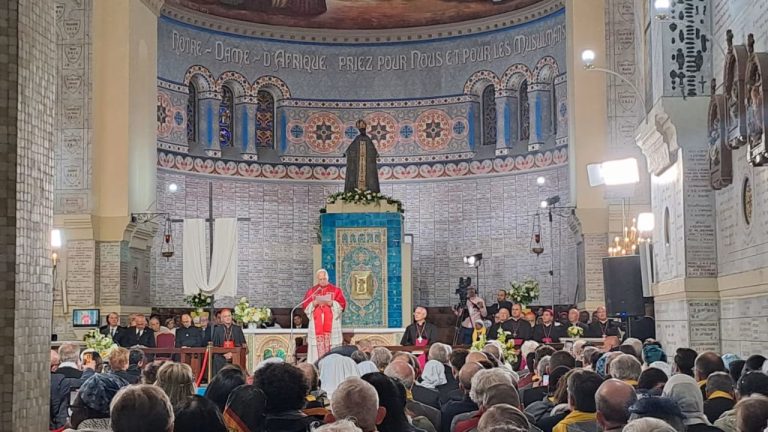
In Algeria, dialogue with Islam is not a peripheral activity; it is the Church’s core mission. This “dialogue of life” occurs in the shared suffering and joys of daily existence. As Bishop Michel Guillaud of Constantine recently noted, St. Augustine himself remains a figure who “inspires Christians and Muslims alike,” serving as a common cultural and spiritual ancestor.
6. A Legal Framework of Respect and Scrutiny
While the Algerian constitution affirms freedom of conscience, religious practice is governed by strict regulations. The Church operates with formal recognition but must navigate laws that prohibit proselytism. This has led to a unique pastoral identity centered on the “theology of the neighbor,” where the Church seeks to be a “blessing” to the entire nation.
7. A “School of Humility” for the Universal Church
The Pope’s visit is being framed as a “school of humility.” By visiting one of the smallest Catholic communities in the world, Pope Leo XIV is signaling that the periphery is the center of the Church’s heart. His presence is a reminder that the Church’s vitality is measured not by the size of its cathedrals, but by the depth of its fidelity to the Cross.
Spiritual Resolution
As we follow the Holy Father’s journey to the land of the martyrs, let us renew our own commitment to the “Gospel of Presence.” Let us commit ourselves to:
The Sacrament of Confession: To purge our hearts of any “spirit of conquest,” seeking instead the humility of the Tibhirine monks.
Eucharistic Adoration: To pray for the small Catholic community in Algeria, that they may be sustained by the “Bread of Life” in their silent witness.
The Holy Rosary: To entrust the peace of North Africa and the success of the papal visit to the maternal care of Mary, Our Lady of Africa.
The Holy Mass: To offer our participation in the Holy Sacrifice for the intentions of the Pope as he builds “bridges of fraternity” in Algiers and Annaba.
Sacred Scripture: To meditate on the writings of St. Augustine, allowing his search for the “Beauty ever ancient, ever new” to guide our own spiritual journey.
Watch The Holy Father’s Apostolic Journey to Africa here: https://ewtnafrica.com/live-papalvisit-africa/
To remain informed about Catholic life, teachings, and global Church developments, readers may be encouraged to visit www.ewtnvatican.com for trusted Catholic news and resources.