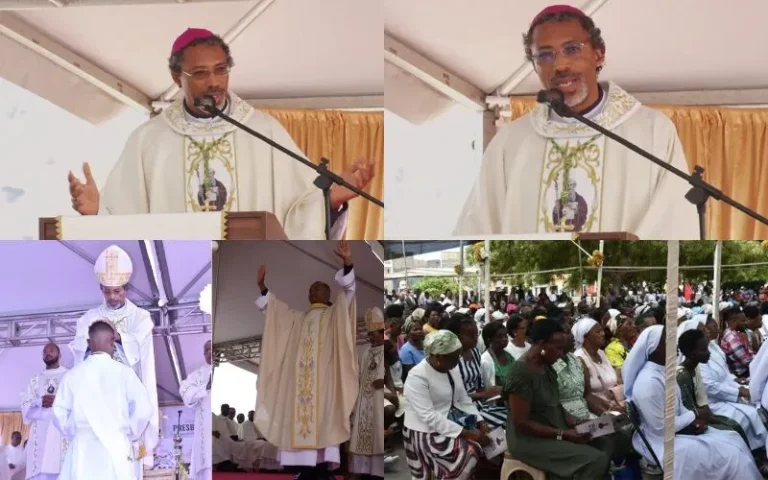
Abuja, Nigeria—In a powerful homily delivered on the Sunday of the Word of God, Archbishop Ignatius Ayau Kaigama of the Catholic Archdiocese of Abuja issued a fervent call to the faithful of Nigeria: to rediscover the Bible not as a mere historical or ancient book, but as the Living Word of God that speaks directly to the challenges and hopes of the present day.
The Archbishop’s message, delivered on January 25, 2026, at St. Joseph Pastoral Area, Lugbe Across, resonated deeply with the Church’s universal emphasis on Scripture, a focus established by Pope Francis in 2019 with the Apostolic Letter Aperuit illis. The Holy Father instituted the Third Sunday in Ordinary Time as a day dedicated to the celebration, study, and dissemination of the Word of God, a move that Archbishop Kaigama highlighted as crucial for the spiritual vitality of the Nigerian Church.
“The purpose of declaring this third Sunday of the year as the Sunday of the Word of God is to emphasize that the Bible is not just an ancient book but the living Word of God that speaks to us daily,” Archbishop Kaigama stated.
The Bible as a Binding Force for Unity
The homily was particularly poignant as it coincided with the conclusion of the Week of Prayer for Christian Unity (January 18-25). Archbishop Kaigama stressed that in a world increasingly polarized by ethnic, political, and denominational lines, the Word of God must become the binding force that unites all Christians.
He echoed the timeless wisdom of St. Jerome, declaring, “Ignorance of Scripture is ignorance of Christ.” The Archbishop lamented that when the faithful ignore Scripture, they ignore one of the foundational pillars of the Church, hindering growth in unity, holiness, and true knowledge of God.
The message of unity was drawn from the Second Reading, where St. Paul passionately appealed to the divided Corinthian community, directing their attention to Christ crucified as the sole source of harmony. The Archbishop applied this lesson to the Nigerian context, urging the faithful to rise above the “little things that divide us” and embrace the basic things that unite us, reminding the world that “there is only one race that matters, and that is the human race”.
The Call to Mission and Conversion
Drawing from the Gospel of Matthew, which recounts Christ’s public ministry beginning in the neglected region of Galilee, the Archbishop reminded the congregation that “God often chooses what the world overlooks.” The Kingdom of God, he explained, is not a geographical territory but “God’s active and loving reign in human history”.
The call to embrace the Living Word is intrinsically linked to the call to mission. Archbishop Kaigama urged Nigerians to emulate the first disciples, who immediately left their fishing nets to follow Christ.
“Leaving the net and following Christ means leaving our worries, our fears, our bad habits, our resentment, our pride, our selfishness, our old ways of life; it means letting go of everything that keeps us away from God and saying ‘Yes’ to Him, through our lifestyle,” he preached.
He emphasized that the mission of evangelization is not reserved for the clergy alone but is “entrusted to the laity who serve in the Church as altar servers, readers, Eucharistic ministers, catechism teachers, and so on. In fact, all the baptized and confirmed are called to be fishers for Christ”. This powerful affirmation of the laity’s role is particularly significant in Nigeria, where the Church is a vibrant and rapidly growing force, yet faces immense challenges from insecurity and the commercialization of the Gospel.

A Spiritual Resolution: Anchoring Our Lives in the Word
The Archbishop’s call to make Scripture a central part of daily life is a profound invitation to spiritual renewal. To truly embrace the Bible as the Living Word, we must commit to the Sacramental life of the Church:
Sacred Scripture: We must dedicate time daily to Lectio Divina—the prayerful reading of Scripture—allowing the Word of God to illuminate our minds and shape our hearts, transforming us from within.
The Holy Eucharist: We must participate actively in the Holy Mass and receive the Eucharist, the ultimate expression of the Word made Flesh, which provides the grace and strength to live out the Gospel message in our daily lives.
The Sacrament of Confession: We must approach the Sacrament of Confession regularly, seeking the mercy of God to cleanse us of the “bad habits, resentment, and pride” that keep us from following Christ fully.
The Holy Rosary: We must pray the Rosary, meditating on the mysteries of Christ’s life through the eyes of the Blessed Virgin Mary, who perfectly embodied the faithful acceptance of the Word of God.