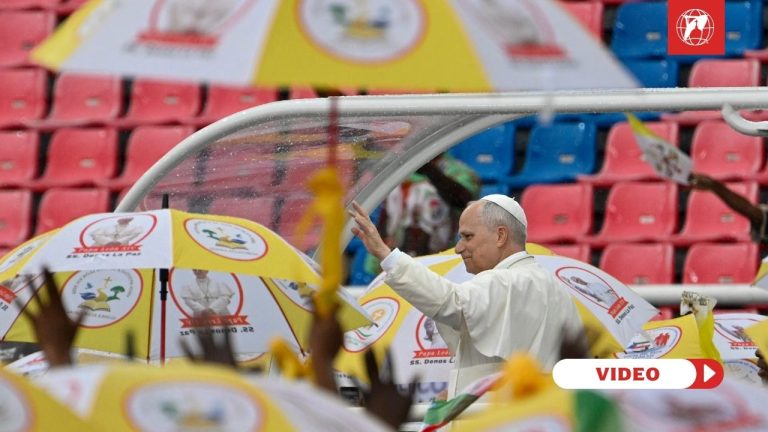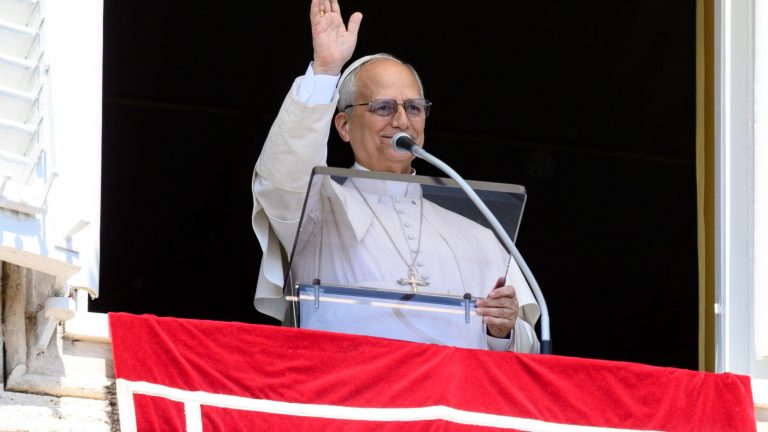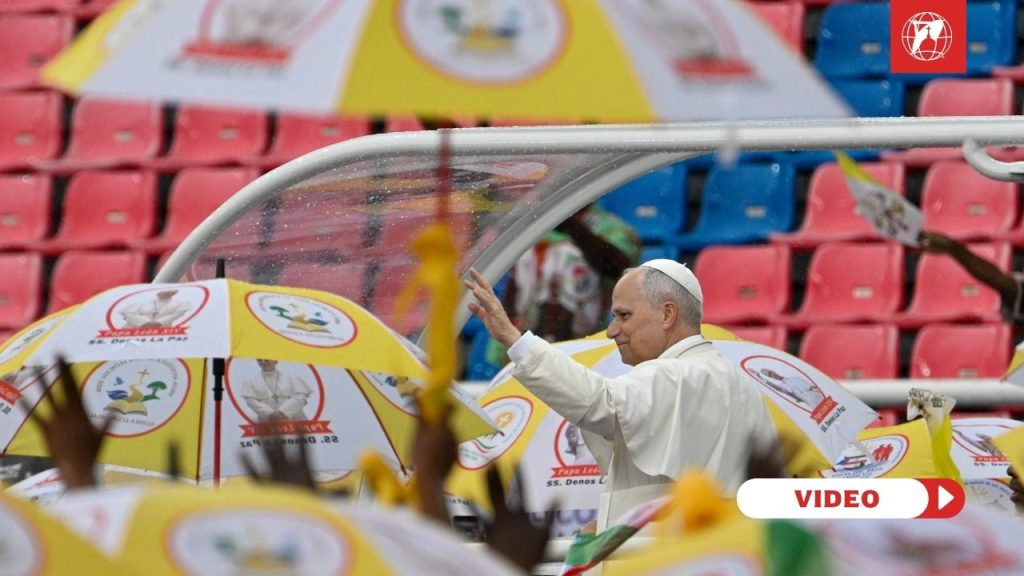
VATICAN CITY — After an extensive 11-day apostolic journey across Africa, Pope Leo XIV has returned to Rome, leaving behind a profound spiritual and pastoral impact.
Traveling more than 11,000 miles across Algeria, Angola, Cameroon, and Equatorial Guinea, the Holy Father’s visit was more than symbolic. It was a powerful expression of unity, peace, and closeness to the people, especially in regions marked by conflict, poverty, and marginalization.
A Presence That Changes Everything
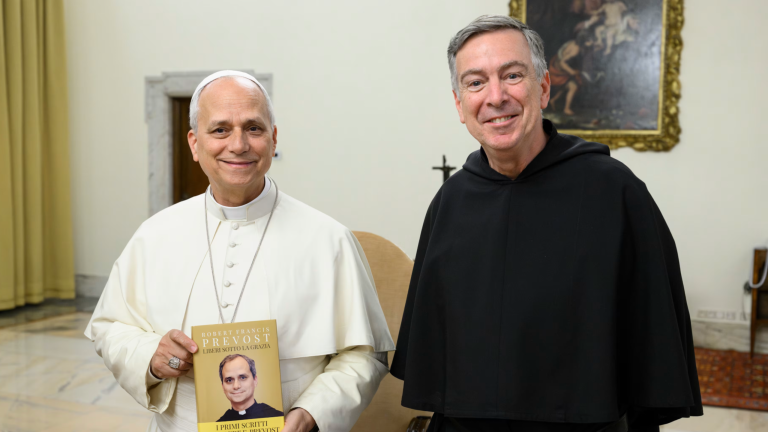
For many in Africa, the physical presence of the Pope carries extraordinary meaning. According to Fr. James Wambugu, an Augustinian friar deeply connected to the continent, this visit was transformative in ways that go beyond headlines.
“Having a pope in Africa is not the same as having the pope in Italy. The last time, Pope Francis came to visit us in Kenya; everything stopped for us.”
For local communities, the Pope’s presence is not abstract—it is deeply personal and tangible.
“To see the pope, for us to listen to him, that physical presence is very profound, because people have seen him in television, they have heard his name and all these things.”
But this encounter goes further than recognition—it becomes a moment of belief and unity.
“But now, they are like, they are seeing it, and to see is to believe. Even when we are people of faith, the physical presence is something that matters.”
Fr. Wambugu emphasizes that the Pope embodies the unity of the global Church:
“And he’s a unity of the Church, he brings about, he connects the Church in all its dimensions, in all the places.”
A Central Message: “I Am Here to Proclaim Peace”
Throughout his journey, Pope Leo XIV returned repeatedly to one central theme: peace.
In one of his most direct statements, the Holy Father declared:
“I am here to proclaim peace!”
This message carried particular weight in regions experiencing civil unrest, interreligious tensions, and social instability.
Fr. Wambugu reflects on the importance of this message in context:
“If you look into these countries that in your struggle, there is civil war, there is the division between Christians and Muslims.”
In such environments, the Pope’s words are not merely aspirational—they are deeply needed.
“So going there, and speaking about peace, that’s another profound thing.”
His visit also carried a message of solidarity for often overlooked communities:
“He is going to other countries in the south of the Sahara, countries that are, have been marginalized in many ways, countries that have many challenges.”
And perhaps most importantly, the Pope’s presence reminded believers they are not alone:
“In other words, he is telling the Christians in those countries that you are not alone. You are together in this.”
A Pope Who Knows Africa
Fr. Wambugu highlights that Pope Leo XIV’s connection to Africa did not begin with this trip. Long before becoming Pope, he was already attentive to the continent’s realities.
“Before he became the pope he had prior knowledge of many countries in Africa, where the Augustinians live.”
During his years as Prior General, he remained closely engaged with local challenges:
“We saw him as our prior general for 12 years and we communicated to him about various issues that are affecting Africa.”
Importantly, these were not passing concerns:
“And those issues they are not just matters that pass through. They are matters that stuck somewhere in his heart.”
This deep awareness has shaped how many Africans perceive him today:
“And I think many people in Africa, they will see a pope who cares, a pope who is concerned with the welfare of the people.”
Fr. Wambugu also recalls the Pope’s personal character:
“He was a very kind man, very gentle but firm. A good listener.”
Even small gestures—like remembering individuals by name—leave lasting impressions:
“And when we hear somebody who knows you by name, you discover this is serious. It’s not just a matter that is passing, it’s a matter that connects with a person.”
For those who have encountered him, this authenticity stands out:
“So I can remember him as a person who is very committed to his vocation.”
A Powerful Moment: Visiting Prisoners in Equatorial Guinea
One of the most striking moments of the trip came during Pope Leo XIV’s visit to Bata Prison, where he met with inmates and offered a message of dignity and hope.
Reflecting on the encounter, Fr. Wambugu described its potential impact:
“This is going to be very symbolic and maybe this is going to be point of transformation to someone of those people who might think that crime is probably the only way out in life.”
He connected the Pope’s actions directly to the Gospel mission:
“See, as a vicar of Christ, what we have heard from the Gospel of St Luke, the spirit of the Lord is upon me, he sent me to proclaim the good news, freedom to the captives, he’s exactly doing that.”
The long-term effect of such gestures may be profound:
“And if people remember Jesus to be concerned about the welfare of the remotest, of the poorest, I believe that now, many people are going to remember him that way.”
A Living, Vibrant Church
The visit also highlighted a striking contrast between the Church in Africa and other parts of the world: its vitality.
Fr. Wambugu recalls his first experience in Europe:
“When I first came to Italy and I was in the Church of St Rita in Milan, I felt some bit of fear because we had a huge church, with very few people who came to church.”
In Africa, the reality is very different:
“But in Africa, the churches are packed, and not only by the old people, the old, the middle aged and the young.”
This vibrancy reflects a deeply rooted and active faith:
“This is a new thing, this is a completely new thing.”
He emphasizes the contrast clearly:
“In Africa, the Church is packed with people who are alive.”
Despite ongoing challenges—including poverty, conflict, and instability—the African Church continues to thrive.
For Fr. Wambugu, this is not just resilience—it is a sign of something deeper:
“Those who believed in him, they made them to become children of God, and that is what people in Africa are experiencing.”
Pope Leo XIV’s journey to Africa was not simply a diplomatic or pastoral tour—it was a profound moment of encounter.
By showing up physically, speaking boldly about peace, and engaging directly with the most vulnerable, the Pope reinforced the Church’s mission as a global community united in faith.
In a world marked by division, his message in Africa was unmistakable:peace is possible, faith is alive, and no one is forgotten.
Adapted by Jacob Stein
Source: https://ewtnvatican.com/articles/why-pope-leo-xivs-traveled-to-africa