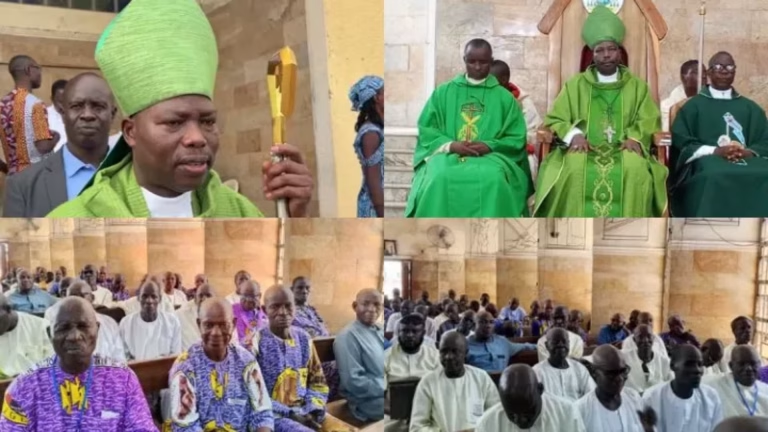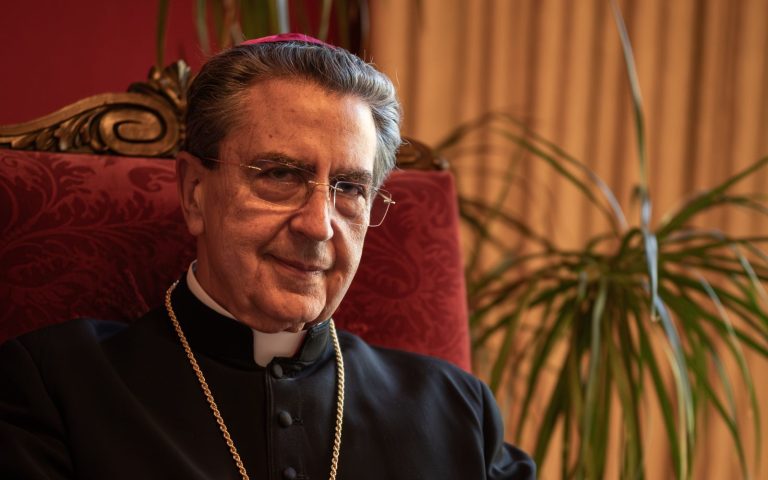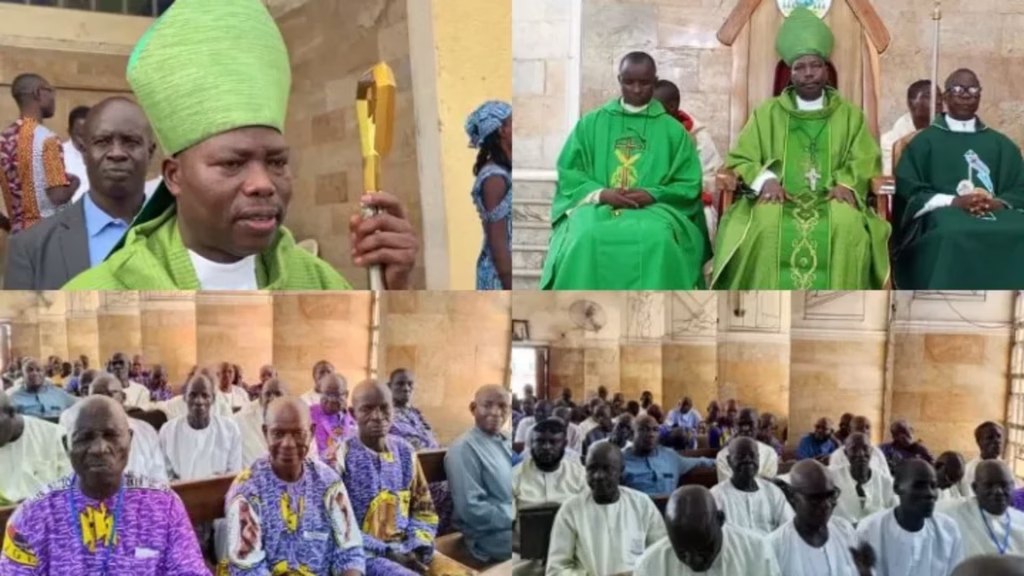
Bishop Stephen Dami Mamza of Nigeria’s Catholic Diocese of Yola. | Credit: ACI Africa
Nigeria Terrorism Response is the focus of a Catholic bishop’s appeal urging stronger political commitment to end terrorism, protect innocent lives, and restore lasting peace across the country.
Nigeria Terrorism Response remains a pressing concern as Bishop Stephen Dami Mamza of the Catholic Diocese of Yola says the country’s ongoing insecurity is not caused by a lack of military capability but by the absence of sufficient political will to confront terrorism decisively. Speaking during the Catholic Men’s Organization meeting of the Jos Ecclesiastical Province, the bishop expressed concern that years of violence continue to devastate communities despite Nigeria possessing the resources needed to address the crisis.
Bishop Mamza argued that the continued attacks by terrorist and armed groups have claimed thousands of lives, displaced families, and left entire communities living in fear. While recognizing the sacrifices of the Nigerian Armed Forces, he questioned whether national leaders have demonstrated the commitment necessary to eliminate the persistent insecurity affecting many parts of the country.
For Catholics across Africa, the bishop’s remarks serve as both a call for responsible leadership and an invitation to pray for peace, justice, and the protection of every human life.
Nigeria Terrorism Response Requires Strong Political Commitment
Reflecting on the country’s security challenges, Bishop Mamza said Nigeria possesses the military capacity to confront terrorism successfully.
He pointed to the Nigerian Armed Forces’ experience in peacekeeping missions across Africa as evidence that the country has the necessary personnel, equipment, and expertise.
According to the bishop, the greater challenge lies in ensuring that those responsible for governing the nation demonstrate the determination and unity needed to defeat terrorism and restore public confidence.
He warned that prolonged insecurity continues to undermine national development and inflict suffering on innocent citizens.
Protecting Human Life Must Remain the Priority
Bishop Mamza stressed that every government has a fundamental responsibility to safeguard the lives of its people.
He expressed concern that political interests too often overshadow urgent efforts to protect vulnerable communities from terrorist attacks and other forms of violence.
The bishop also urged political leaders to place national unity above partisan differences, emphasizing that cooperation is essential if lasting peace is to be achieved.
He reminded public officials that leadership is measured by service to the people, especially those most affected by insecurity.
The Church Continues to Pray for Peace
Despite the continuing violence, Bishop Mamza encouraged Catholics not to lose hope.
He reaffirmed the Church’s commitment to accompanying victims through prayer, pastoral care, and practical support while continuing to advocate for justice and peace.
The bishop reminded the faithful that the Gospel calls Christians to reject hatred and violence while remaining steadfast in hope.
Even amid suffering, he said, believers are called to become instruments of reconciliation and peace within their communities.
Why This Matters for the Church in Africa
The insecurity affecting Nigeria continues to impact parishes, schools, hospitals, and entire communities throughout the country.
Priests, religious, catechists, and lay faithful often carry out their mission despite significant risks.
The Church continues to proclaim that violence can never overcome the Gospel and that lasting peace requires justice, accountability, and respect for the dignity of every human person.
Bishop Mamza’s appeal reflects the Church’s ongoing mission to defend life and encourage leaders to work for the common good.
What Can Catholics Learn From This?
The bishop’s message reminds Catholics that peace is everyone’s responsibility.
While governments must fulfill their duty to protect citizens, every Christian is also called to reject hatred, pray for leaders, and promote reconciliation wherever possible.
His appeal invites believers to deepen their commitment to C.A.R.E.S. through Confession, Adoration, the Rosary, the Eucharist, and Sacred Scripture.
These spiritual practices strengthen the faithful to become witnesses of hope, justice, and peace even during times of uncertainty.
A Spiritual Resolution
As we pray for Nigeria, let us remember all those affected by terrorism, violence, and insecurity.
The Sacrament of Confession: Let us ask God to remove hatred and fear from our hearts and help us become instruments of peace.
Eucharistic Adoration: Let us pray for victims of violence, their families, security personnel, and leaders entrusted with protecting the nation.
The Holy Rosary: Let us entrust Nigeria to the maternal protection of the Blessed Virgin Mary, asking her to intercede for peace and reconciliation.
The Holy Mass: Let us offer our participation at Mass for an end to terrorism and for the healing of communities wounded by violence.
Sacred Scripture: “Blessed are the peacemakers, for they shall be called children of God.” (Matthew 5:9)
May justice prevail.
May peace overcome violence.
And may Christ, the Prince of Peace, guide Nigeria toward lasting security, reconciliation, and hope.
For the latest Catholic news from across Africa, visit EWTN Africa. Follow our social media pages for daily prayers, inspiring reflections, Catholic teachings, and faith-filled content that brings you closer to Christ every day.